
If the Bible Is Sufficient, Do We Really Need Theology?
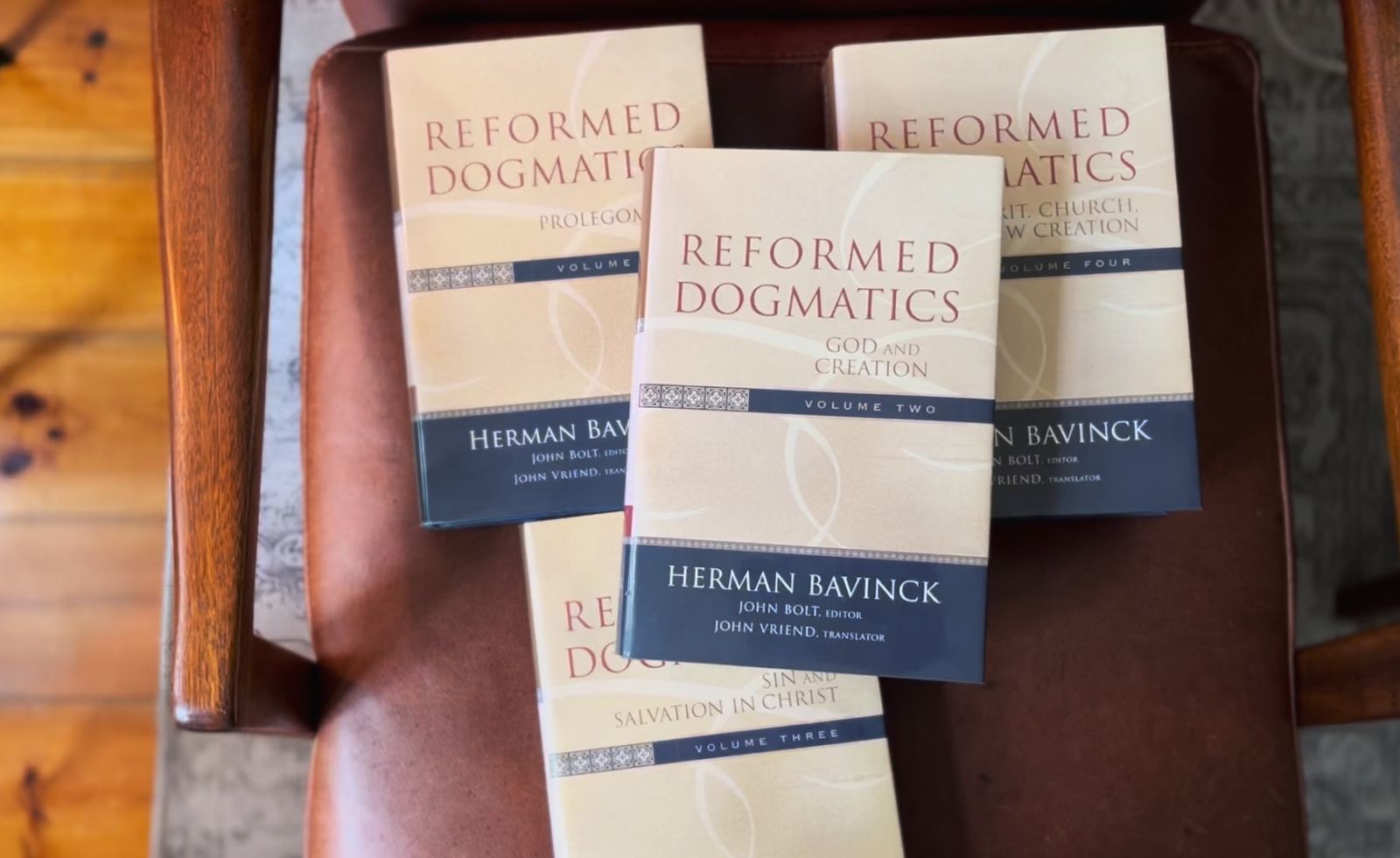
Earlier this year I set out to dissuade pastors from reductive approaches to shepherding, which often turn on the pious sounding insistence that we need only teach the Bible. Of course it comes across as a humble commitment to sola scriptura—assuming that’s what the Reformers meant as well as pretending that they themselves didn’t write mountains of theology as well as promulgating various confessions and catechisms. But as I wrote in that article, “Balanced preaching,” along with Reformed theology, “is committed to furnishing the flock with theological categories, developing their grasp of Christian doctrine.” I went on to say that if pastors don’t do this out of some misguided insistence on sola scriptura, I fear their God’s people will be ill-equipped for both robust Christian thinking and—a little ironically—Bible reading.
In response a few readers felt I was suggesting that the Bible isn’t enough. After all, among Christians who prize the Bible and expository preaching can sometimes lurk the notion that theology is fruitless, a fool’s errand. In defence of those believers, one might point out that this notion is the result of poor instruction. But in my experience many Christians are very content with the idea. After all, who wants to feel bad for streaming over 20 hours of series in a week without committing even an hour of theological reading and engagement? It’s much easier to let ourselves off the hook if we can boldly declare: “this is my Bible. I am what it says I am. I have what it says I have. I can do what it says I can do.” Who needs theology anyway?
To answer the question posed by my title, while the Bible is enough—or sufficient—Christians need theology. And Herman Bavinck is here to persuade us.
The Church Must Keep Retelling Salvation History
Towards the end of his relatively unknown little work, What Is Christianity?, Bavinck asks whether the Bible is enough. As you read the lengthy passage below, note that his high view of Scripture doesn’t result in demeaning theology or Christian thought; in fact, we can observe the opposite.
“Scripture is the magnificent painting which, in a series of captivating scenes, brings before our eyes the works of God in salvation history. Well then, that powerful imprint which the Scriptures make on the Church, it must reproduce. What the Church has seen through that wonderful book, what it has felt of the word of life, it must proclaim. The Church must try to put it into words and account for it. The Church has absorbed what the Scriptures tell it, lived it as it were, and now reproduces it in its confession. Emerging again from the penetration of the Holy Scriptures, it looks around itself, feels strange in this world, and expresses to opponents and those who are astray—with holy enthusiasm—what it has experienced and enjoyed.”
As Bavinck puts it, what the Church experiences and enjoys in God’s wonderful book demands retelling or reproduction. Only he isn’t referring to reprinting the Bible—as important as that is—but putting into words and accounting for what the Church feels as she hears from God. Christians ought to both absorb and attest to what God has revealed in the Bible, that magnificent painting with its manifold captivating scenes. “That powerful imprint which the Scriptures make on the Church, it must reproduce.”
Throughout the ages Christian theologians have carried out this beautiful vision with varying success. There are many reasons for Christians’ mixed feelings towards theology—a few of which I explored recently here and here—but a high view of the Bible does not entail the dismissal of theology. Instead, it invites us to gratefully listen to Christians voices from the past and perhaps add ours to their chorus.
Theology Is More Than Man’s Thoughts About God
Bavinck goes on, possibly anticipating another reason to support an indifference towards theology: isn’t theology just people’s thoughts about God? In response to this objection Bavinck says, “The Church does not create; it does not discover a single truth; it only finds what is laid down in Scripture; it merely reflects after the Holy Spirit has thought it all out, but then the Church expresses what it has found and thus reflects it in its own language, in its own way, fully conscious and understandable for everyone. The confession it expresses, therefore, does not stand above or beside or outside Scripture, but entirely in Scripture.”
While there is no shortage of speculative and abstract theology, the best Christian thinking is—as Bavinck puts it—the Church’s attempt to faithfully witness to what it hears from the Spirit in the Bible. Regrettably much theology today is self-referencing; as Stanley Hauerwas observes, instead of writing about God, academic theology has essentially become people writing about the thoughts of other people. When theology takes this direction, the Church’s suspicion is justified. But when theologians take seriously Bavinck’s charge then their writing will serve believers and witness to their own age. The means of doing so is nothing other than what God has “laid down in Scripture.” Therefore the best theology isn’t self-congratulatory or circular but the Church’s humble and prayerful attempt to think God’s thoughts after him, for “the Holy Spirit has [already] thought it all out.”
The Church’s Theology Is Incomplete
Bavinck makes one last point in this remarkable section. Again he seems to anticipate a common objection to theology: we’ve got two millennia of Christian theology, do we really need more? Somedays I’m more sympathetic to this scruple than others, though as I’ve written elsewherethe relative abundance of theological writing in certain quarters doesn’t cover the lack in others. Bavinck, on other hand, offers a peculiar answer, one that I’ve argued before: the Church’s theology is incomplete.
Concerning the Church’s confession, Bavinck insists that “what is contained in that Bible is so rich and so broad in scope that it cannot be taken in and reproduced by one person, not by a single generation of people. That requires centuries.” The implications of this are inspiring because not only does Bavinck urge the Church to write he simultaneously celebrates what she’s already written. “The knowledge of the length and breadth and depth and height of Christ’s love can only be attained in fellowship with all the saints.” It must continually be heard and retold, pondered and delighted in.
Thus Bavinck continues, “each time the Church is introduced more deeply into God’s revelation in subsequent times, this root grows up and various branches grow on it, some of which bend sideways and grow in the wrong direction. But thus, in the course of the centuries, the love of Christ is interpreted more and more broadly, and that glorious image which the Church conceives from the Holy Scriptures and causes to radiate outwardly is further and further completed.”
The Bible Corrects a Low View of Theology
This article is longer than what I tend to publish here—I hope the extended portions from Bavinck’s What Is Christianity? offset my own ramblings. In conclusion, many Christians today have adopted a low view of Christian theology. Without getting into the reasons behind that view, Bavinck provided us with three correctives to it. Firstly, the Spirit empowered reception of God’s glorious truth demands retelling. Secondly, theology proper is an initiative of God that draws people to him. Finally, the theological task will remain incomplete until Christ returns.