
Is It Time to Commit Western Theology to the Flames?
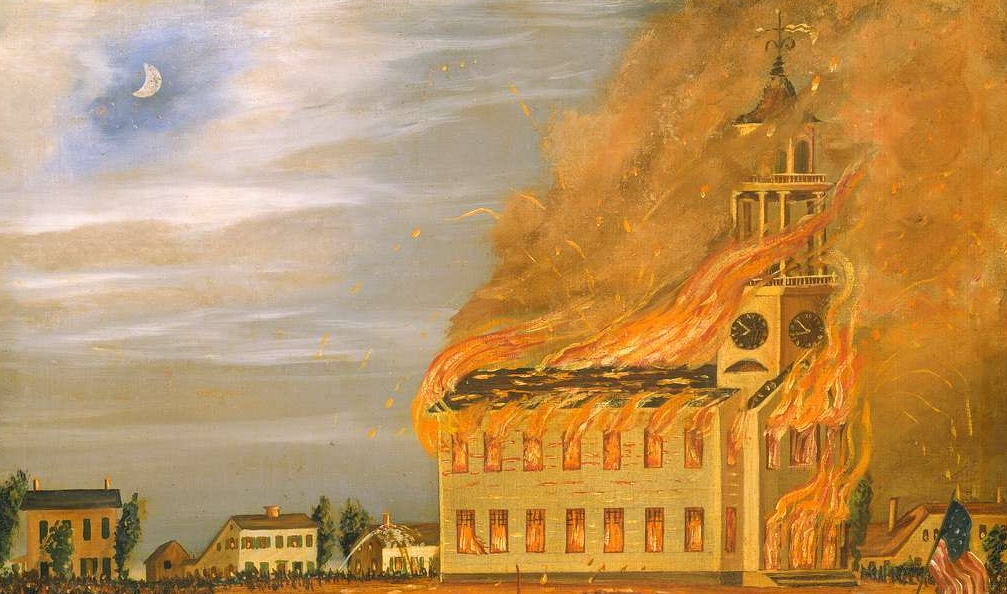
These days, whether it’s in an effort to decolonise theology or simply under the banner of deconstruction, it’s trendy—and relatively costless—to pillory Western theology. This dismissal of the Western tradition is part of a larger social reckoning. As I contend below, that broader backdrop isn’t inconsequential as we observe the same instincts among theologians; simultaneously it is beyond the scope of this article and my own abilities. As a theologian, however, I find this widely recycled scorn for Western theology troubling and profoundly problematic. My reasons for saying so will be spelt out in a series of articles, when I will address the various theological, intellectual, historical and philosophical problems with anti-Western sentiments. My aim for this article is far more modest: to briefly explore why this mood is so prevalent and to highlight one of its Achilles’ heels.
The Mood
As already alluded in the first line of this article, deconstruction is on trend. Ours is an age of dismantling, aggressively suspicious of inherited traditions and authorities out of preference for the sovereign self. As Marilynne Robinson notes in her outstanding essay Decline, there exists “a cultural habit of picking up the latest thing and discarding the second-latest thing without a thought or a backward glance. There is a great deal in our culture that encourages us to do this.” Thus we have a rejection of Western dogmatism in the name of 21st century dogmatism.
The more I reflect on this trend, particularly within theology, the more ironic it appears. One of the criticisms routinely levelled against Western theology is its being indistinguishable from 19th century European assumptions—in effect, the Enlightenment with all its rationalistic fervour and imperialistic instincts. Only, the suggested solutions to this poorly dressed-up colonialism are, supposedly, newer Western tools: postmodernisms and critical theory.
Irony aside, in addition to deconstruction being on trend it’s also relatively costless. While its heralds would have us see them as bold martyrs, on some or other level they’re self-preserving. As I wrote a few years back on cancel culture, with the help of Friedrich Nietzsche, “We’re no longer afraid of being excluded by mores of the past but the progressive culture of the future.” As the bell supposedly tolls for the West, vandalising its proverbial coffin is hardly heroic—it’s actually quite dull and largely predictable.
Though more could be said, let’s conclude this section on the mood behind these daring denunciations of Western theology by coming back to Marilynne Robinson’s essay. “Its exponents,” who in this case are the Western tradition’s detractors, “feel that scales have fallen from their eyes. Why talk of the divagations of other decades,” Robinson asks, when “context cannot catch revelation in its snares.” The entire essay—together with anything Robinson writes—demands careful reading. But her point is fairly simple and remarkably apt. The ongoing project to deconstruct theology is itself animated by a religious zeal or devotion. This is why its adherents refer to their efforts as prophetic. Yet I wonder whether its animus is more zeitgeist than Holy Ghost.
The Problem
Following that somewhat disorderly dissection of the moods I perceive behind the dogmatic dismantling of Western theology, let’s consider one profound problem with them.
As Herman Bavinck writes in the first volume of his Reformed Dogmatics, “Frequently doubt makes much deeper inroads into skepticism and agnosticism. Then dogmatics, faith, confession, and fellowship, are gone; mere negation is incapable of creating fellowship” (2.23). This concise statement isn’t dissimilar from the argument I made a few years back, demonstrating that cobelligerents make bad friends. For the enemy of your enemy, in reality, is not your friend. Cobelligerence should never be confused with community; to use Bavinck’s—as well as the Bible’s—terminology, it doesn’t create fellowship. It doesn’t build up. Defining yourself by what you aren’t is hardly an identity, and therefore it’s ineffective in bringing people together. As Bavinck puts it, “mere negation is incapable of creating fellowship.”
Yet mere negation is a central tenet of the mood and movement we’ve considered above. Of those two words, mood is more fitting since to speak of a movement suggests cohesion and direction. This mood creates theological communities like the hellscape from C. S. Lewis’ Great Divorce. There, all anyone needs to do is think it and a house appears. Thus the landscape is littered with empty streets and isolated homes as far as the eye can see. Though Lewis refers to these people as neighbours, I detect sarcasm in his choice of word because where the inhabitants settle is determined by their contradistinction and quarrels with one another. Eventually, then, these neighbours live as far as possible from each other; they don’t establish new communities but rather a sea of isolated individuals.
A Solution
There’s much more to say—indeed, it’s my hope that this article will stimulate some dialogue and maybe even an incensed response or two in writing. Western theology is imperfect. It’s weighed down by cultural baggage, infused with various worldview assumptions that originated outside of the Bible. So there’s space for more critical receptions of Western theology than perhaps tends to be permitted. Though I’ll get into his writing later in this series, John Webster superbly expounds the Western tradition while also exhorting theologians to adopt a somewhat ironic, openhanded and provisional stance towards their theologies. All of us would benefit from listening to him.
I, however, am firmly ensconced in the Western tradition, hopefully without being too blinkered. Therefore it’s only fitting to conclude with an appeal made by one of my favourite Western theologians, Herman Bavinck. In his terrific little book, What Is Christianity?, he writes, “One should not overlook the comfort it has poured into our hearts, the intimate and tender piety it has cultivated, the holy life it has enabled us to attain. Churches and monasteries, charitable foundations for all kinds of poor people, evangelism and missions, family and society, architecture, painting and poetry, all the goods of our rich culture are eloquent witnesses of Christianity. Christianity has revealed to us the heart of God and also the heart of mankind.”