
Millennials Got Phones Young, But the Similarities Stop There
There are many poor arguments in support of children getting their first smartphone earlier and earlier, perhaps even before they’re teenagers. These include:
- “All of Leah’s friends have a smartphone, I don’t want her to feel left out”
- “Community is different today. What’s wrong if Rupert finds his online?”
- “This is how the world is now. And it’ll increasingly be Amelia’s world.”
As you might’ve detected, I deem these reasons and their various iterations far from convincing. Though I’m unwilling to go there—yet—I’m tempted to say that giving your child a smartphone could be tantamount to bad parenting. Of course, such lines are incredibly difficult to draw and we must be alert to legalistically shaming parents who’re only doing their best. But as I suggestedlast year, coinciding with Australia’s ban on social media for children under-16, everyone who’s even marginally self-aware can attest to the destructive and addictive aspects of social media and smartphones—and that’s among adults; imagine what they’re doing to children.
Fortunately, we don’t have to imagine. Thanks to the ongoing work of people like Jonathan Haidt, parents can no longer deny that the unholy digital trinity of social media, smartphones and streaming services is profoundly damaging our children. At this point, to suggest otherwise puts you in the orbit of the same people who insist that the earth is flat.
“We Got a Phone When Were Kids”
However, there’s one anecdotal argument in favour of giving children a smartphone and access to social media that stubbornly persists among my peers. It’s this: most Millennials—myself included—got their first phone long before the age of 16, and we turned out alright.
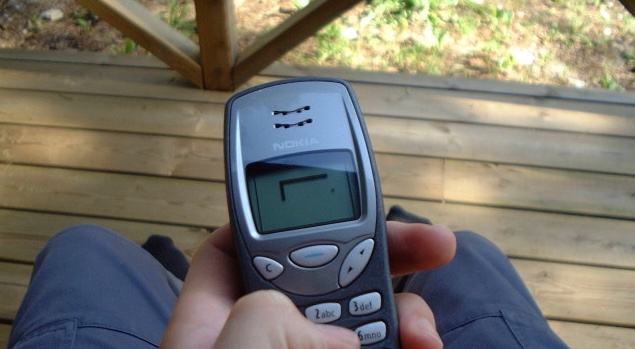
Putting aside the question of whether Millennials “turned out alright,” the above claim has a few not insignificant problems, clustered around the painfully obvious fact that our world and technology has changed both rapidly and radically over the last two decades. That’s right. We were getting our first phone more than twenty years ago. The Nokia 3310 was released in the year 2000. Myspace didn’t even exist then—let alone Facebook, Instagram or TikTok.
If those platforms existed in the early 2000s our Nokia 3310s wouldn’t have been able to access them. I’m not even sure it had a built-in browser. But more than that, data (or airtime) was expensive. Who doesn’t remember keeping track of how many characters we were using as we typed out SMSs?
However I’m not merely reminiscing. The point is that both our devices and the digital landscape of twenty years ago are unrecognisable to digital natives, Gen Z—it’s a foreign land. Access to the internet was immensely limited, as were our devices. In some ways there’s no comparison. Therefore the analogous argument between our teens and today’s is a non-starter.
Today’s Digital World Is Markedly Different
Furthermore, while Nokia was obviously in the business of selling cellphones, the tech giants of today are in a very different business. Yes, they’re still after your hard-earned cash, but they’re even more greedy for your attention. This is particularly true of social media platforms. As Nate Anderson writes, “Many modern digital services want to monopolise human attention,” this is their “fully intended goal.” While Tom and the team behind Myspace might have envisioned an online space for social engagement and self-expression, platforms like TikTok and Instagram are engineered to ensnare. They’re built to hook users and breed addicts willing to spend every last minute of their spare attention for just a few more scrolls.
As the narrator of Don Delillo’s Zero K admits, “I maintain myself on the puppet drug of personal technology. Every touch of a button brings the neural rush of finding something I never knew or never needed to know until it appears at my anxious fingertips, where it remains for a shaky second before disappearing forever.” Find me an adult who can’t corroborate that experience.
What’s astonishing is that despite the mounting evidence along with personal experiences, Millennial parents are still peddling stupid arguments about us getting our first phones before we were teenagers. Stop it. And even if you can’t put your phone down, give your children a chance to set theirs aside rather than colluding with Zuckerberg and company to turn them into social media addicts.
Give Your Children a Chance
“We can scarcely grasp what our generation has wrought by putting a supercomputer into all of our hands, all of the time. If you are reading this, whether on a page or a screen, there is a very good chance that you are caught up in a revolution that may have started with enticing gadgets but has not reshaped everything about how we live, love, work, play, shop, share—how our very hearts and minds encounter the world around us.”
That was written by Nancy Gibbs at TIME, in 2016. Ten years ago. Even in that time the digital landscape has morphed tremendously, monopolising even more of our time and intentionally seeking to grow its marketshare among adolescents. As a parent to other parents—and would-be parents—we must read the times, though not necessarily TIME. Without denying most of us remember the early 2000s fondly, there’s simply no denying that social media is a profoundly different ‘place’ today; as are the devices we use to inhabit it. Children need help to navigate this stupid new world. They need parents who want what’s best for them—not to be handed over to the whims of those who only desire to profit from them.
Having recently finished Jonathan Haidt’s Anxious Generation, I’ll give him the last word. “We need to develop a more nuanced mental map of the digital landscape. Social media is not synonymous with the internet, smartphones are not equivalent to desktop computers or laptops, PacMan is not World of Warcraft, and the 2006 version of Facebook is not the 2024 version of TikTok. I’m not saying that 11-year-olds should be kept off the internet. I’m saying that the Great Rewiring of Childhood, in which the phone-based childhood replaced the play-based childhood, is the major cause of in international epidemic of adolescent mental illness. We need to be careful about which kids have access to which products, at which ages, and on which devices. Unfettered access to everything, everywhere, at an age has been a disaster, even if there are a few benefits.”