
Hebrews: Hear, O Israel, Jesus Is God, the LORD Is One
In an outstanding essay, developing his earlier and provocatively titled God Crucified, Richard Bauckham argues that the author of Hebrews explicitly includes Jesus Christ in the unique identity of God, suggesting that the name the Son inherits is none other than Yahweh (Hebrews 1:4). Bauckham achieves this by first outlining the characteristics of God within Jewish monotheism and then demonstrating how those are attributed to the Son in Hebrews. Such theological work continues to be important for at least two reasons:
- Intellectually lazy claims that the New Testament never incontrovertibly identifies Jesus with God
- Arianism and its modern-day champions, Jehovah’s Witnesses.
On the latter, it’s my intention to release a lengthier and somewhat more technical article exploring the Greek of Hebrews 1, alongside the New World Translation’s embarrassingly bad rendering. On the former—that is, hackneyed claims that no one ever explicitly says ‘Jesus is God’ in the New Testament—you might want to read my article on 1 Peter. But taken together for now let’s test those two positions against Bauckham’s thesis and Hebrews 1.
Jewish Monotheism, Jesus and Hebrews
First up, Bauckham lists seven characteristics of God within Jewish monotheism, which may very well be summed up in Deuteronomy 6:4, “Hear, O Israel: the LORD our God, the LORD is one.” Drawn from both the Old Testament and Second Temple Judaism, Bauckham shows that Jewish monotheism insisted that God:
- Is the sole Creator of everything
- Alone is sovereign over all that he’s made
- Is known through his narrative identity, his self-revelation in the story of Israel
- Will achieve his prophesied eschatological rule
- Is uniquely known by the name YHWH
- Alone is to be worshipped, anything else is idolatry
- Alone is fully eternal, not only into the ages but before he made the world.
In some ways, Hebrews 13:8 attributes many of those characteristics to Jesus the Son when it says, “Jesus Christ is the same yesterday and today and forever.” Even a form critical scholar like Harold Attridge, who has reservations about Hebrews’ Christology, concludes that 13:8 is an explicit comment about the eternal ‘sameness’ of Christ, identifying him as “an integral part of the eternal divine realm that is unchanging.” By identifying the Son with the divine nature (Attridge) or unique identity of God (Bauckham), Hebrews 13:8 underscores many of the above characteristics. This verse alone puts paid to the two aforementioned groups. But let’s consider Hebrews 1:5-13.
“You Are My Son”
You might ask why we aren’t starting with Hebrews 1:1-4. The answer is that I’ll return to it in my later technical post—furthermore those without eyes to see or ears to hear have ways of disregarding its witness to the Son’s divine nature. Only, do that is much more difficult when it comes to Hebrews 1:5ff.
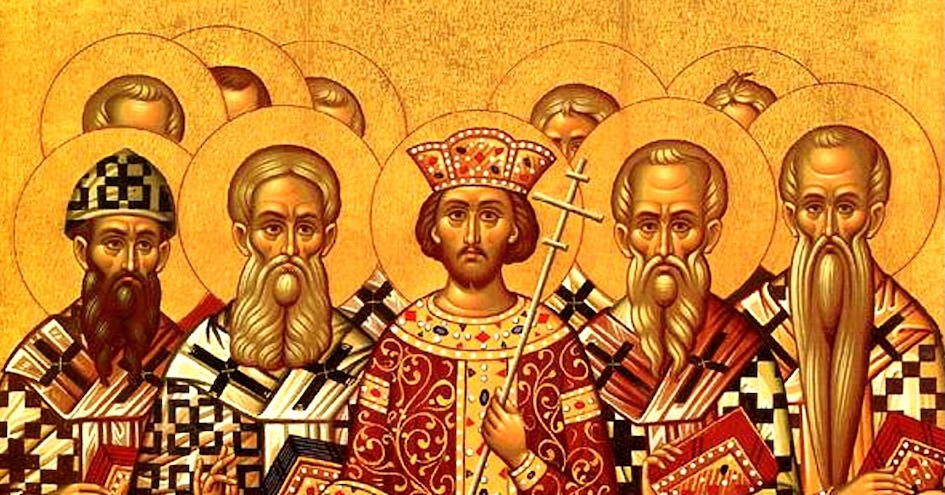
Admittedly, Hebrews 1:5 and the Psalm 2 quotation requires more attention at a later stage. Though I will say two things, briefly. One, in its original context, those words were spoken about an adult king David, suggesting anointing or appointment rather than adoption or origin. Two, the Church has turned over texts like this one for almost two millennia and still arrived the conclusion that Jesus is God. Arianism and all its progeny were banished with the acceptance of the Nicene Creed in the 4th century, where we find side-by-side the language of the Son being “begotten from the Father” as well as “begotten not made, of one substance with the Father.” The New Testament’s description of Jesus as the “firstborn” (Colossians 1:15, 18; Revelation 1:5) or “begotten” (John 1:18; 1 John 4:9) only feels like exegetical dynamite in the hands of theological children.
Moving on from Hebrews 1:5 and to something ostensibly more difficult to evade, at the incarnation all of God’s angels were commanded to worship the Son (Hebrews 1:6). Here God is either breaking the first two commandments (Exodus 20:3-6) or it is appropriate to worship the Son. If the latter is true then the Son must be God.
In 1:7 and 1:8-12 the author of Hebrews then juxtaposes what God says respectively to the angels and the Son. In my forthcoming article we’ll see just how terribly the New World Translation mutilates the Greek of these verses. For now it’s worth pointing out that the most natural reading is to understand 1:8-12 to be about the Son, just as 1:7 is about the angels. This is made explicit by the correlative Greek construction (μὲν… δὲ) as well as the repetition of the preposition (πρὸς). Just as Hebrews 1:7 treats Psalm 104 as God’s speech concerning angels, Hebrews 1:8 treats Psalm 45 as God’s speech concerning the Son. Only an a priori commitment to the Son as divine creature but not fully God could read 1:8-12 and not conclude that the Son is unequivocally identified with God.
“Your throne, O God,” says God to the Son, “is forever and ever” (Hebrews 1:8). Attridge calls this is an explicit recognition of Christ’s divinity. Only the eternal God can reign in the eschaton, forever (see 1:13). This fact seems to be at least one of the author’s purposes for citing Psalm 102 in Hebrews 1:10-12. Everything that God has made, “the foundation of the earth and the heavens” (1:10), will perish but the Son remains (1:11). “You,” still addressing the Son, “are the same and your years will have no end” (1:12). We’ve even skipped over the small detail that 1:10 attributes the work of creation to the Son. Such things could simply never be said about a creature, however powerful. They are indicative of none other than the God who introduces himself as “I am who I am” (Exodus 3:14).
Plain Readings Over A Priori Pleading
At points this article was likely too technical, tightly argued—and it’s far too long. Furthermore on a few occasions it mentions another article that doesn’t yet exist. Forgive me. In closing let me reiterate: claims that the New Testament doesn’t explicitly call the Son God aren’t themselves misguided but actually intentionally misleading. It’s a heretical rue. Just as Nicaea condemned such notions some sixteen centuries ago, so too should we today. Finally, we do so not on the basis of our presuppositions but the plain reading of the Bible and passages like Hebrews 1:5-14.